
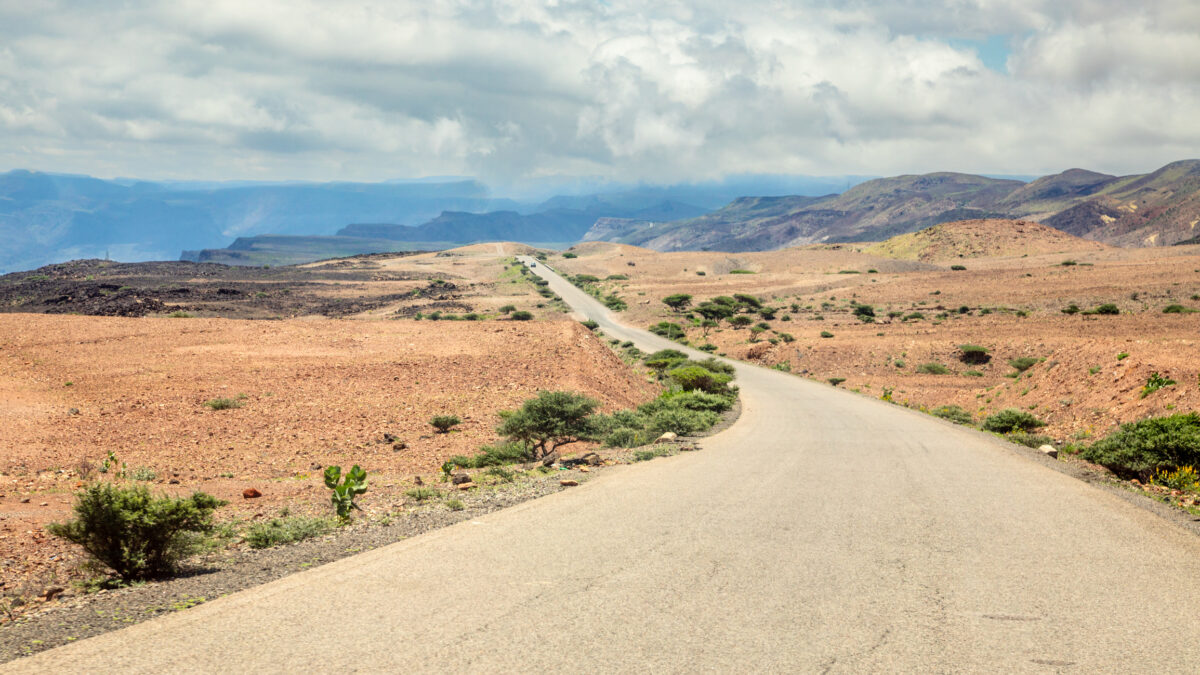
Djibouti Regional Economic Corridor
The Adaptation Need
The DREC is increasingly exposed to climate hazards that threaten both regional connectivity and Djibouti’s food security. Without action, more than 75 percent of the corridor will face extreme heat exposure by 2050 under SSP5 scenarios, undermining road durability. Flood-related Expected Annual Losses, currently $1.4 million, are projected to rise to $2.4–3.3 million by 2050, while landslide-related losses, estimated at $1.5 million today—70 percent of which are indirect—could reach $5.9–6.3 million. These escalating risks highlight the urgency of embedding resilience in Djibouti’s most strategic infrastructure.
GCA’s Added Value
GCA is integrating adaptation into the corridor using the Output- and Performance-Based Road Contracts (OPBRC) model as a replicable framework for future procurements and sector-wide reform. This approach supports Djibouti’s national adaptation priorities, including its NAPA, NDCs, and Vision 2035. Technical assistance focuses on embedding resilience across procurement policies, contractor training, and performance-based incentives. Adaptation solutions include climate-resilient culverts, bridges, and drainage systems, road stabilization measures to withstand extreme heat, and nature-based solutions such as riparian vegetation restoration to mitigate flood risk and preserve natural water systems.

Project goals
Mainstreaming Adaptation and Resilience
By climate-proofing the DREC, GCA is helping Djibouti secure food imports, lower logistics costs, and sustain access to markets, healthcare, and education. A gender analysis has revealed significant disparities in access to transport and public services in the Arta and Ali-Sabieh regions, guiding inclusive infrastructure design. To institutionalize resilience, GCA has developed comprehensive OPBRC guidelines, supported by a set of indicators and KPIs spanning planning, design, construction, and maintenance. These guidelines are scalable across the sector, embedding climate resilience into procurement and contractor practices. By prioritizing investments where traffic flows, trade volumes, food security, and social accessibility converge, GCA is positioning Djibouti’s transport network as a model for climate-smart regional connectivity.
Expected Outcomes
- 42km of road rehabilitated with climate resilient standards
- 30% decrease in annual fatalities from road accidents
- 300 jobs created, including 60 for women
- Reduction in travel time along the Djibouti section of the Djibouti-Addis southern corridor
Timeline
Project status
Technical Assistance Preparation
GCA Support Implementation
September, 2024
GCA Support Completion
Monitoring
Finance
Project Investment Value
Total Investment Value
IFI Investment Value
$160.00M
Other Investment Value
$20.00M
IFI partners

Contacts
General media inquiries
info@gca.orgRequest for information
infrastructure@gca.org