
Improvement of Urban Governance and Infrastructure Project
The Adaptation Need
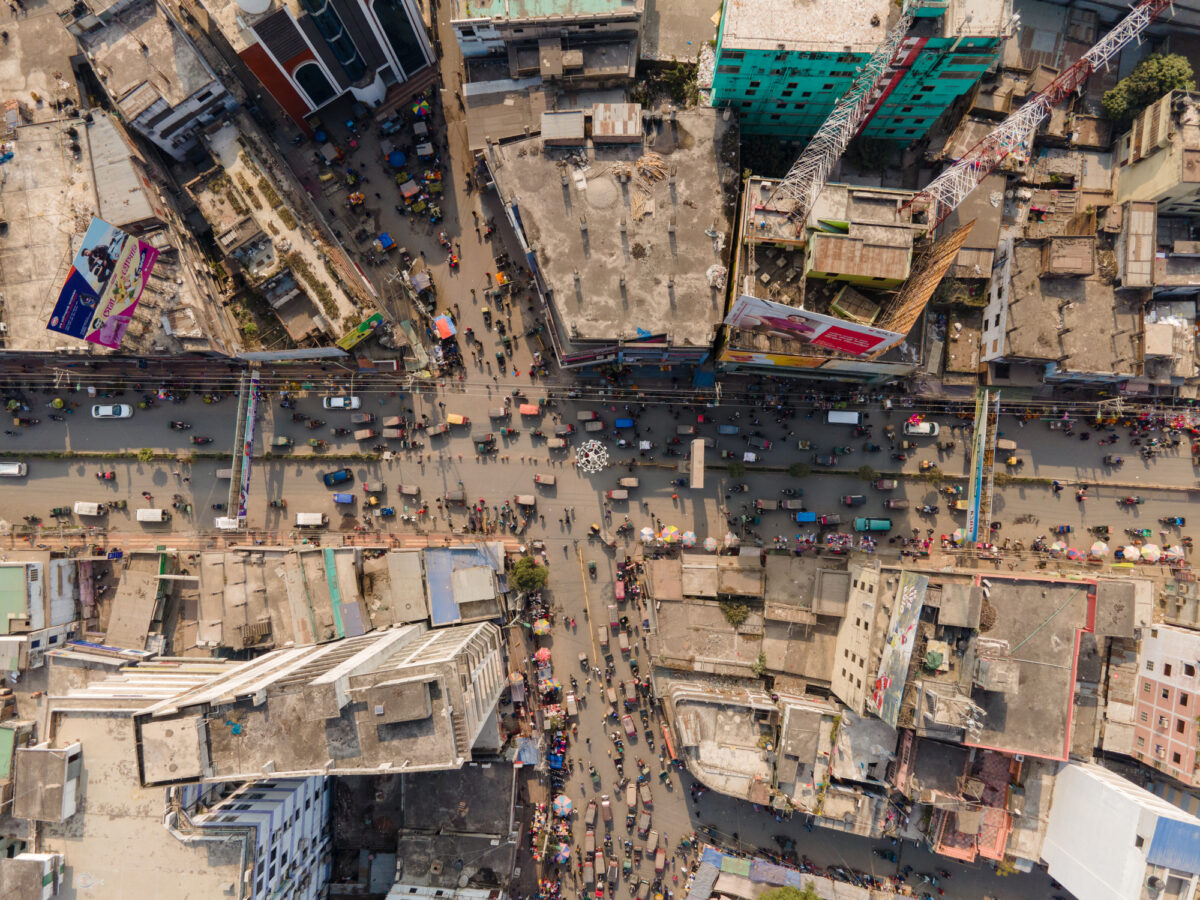
Rapid urbanization has been a significant driver for Bangladesh’s transition to a middle-income country, with urban areas contributing to 75% of the country’s GDP. However, urban growth has outpaced the availability of urban land, infrastructure, and services. Secondary cities often lack institutional capacity and access to resources which constrains their ability to provide climate resilient urban services to their rapidly increasing urban populations. Enhancing climate resilience of urban areas in Bangladesh will require strengthening the capacity of urban institutions on climate resilient urban development.
GCA’s Added Value
GCA’s collaboration with ADB, AFD, and LGED under IUGIP-IV shows how strategically aligned technical assistance, anchored to disbursement-linked indicators, can drive systemic change for climate resilience. Through this collaboration, GCA has co-developed a suite of activities and outputs that are actively shaping how LGED and municipalities plan, design, and implement climate-resilient infrastructure. GCA has (i) mainstreamed climate resilience into the master plans of 50 pourashavas, through strategic inputs into the Terms of Reference developed by LGED for the procurement of planning firms; (ii) developed the Handbook on Climate Risk-Informed Master Plans, a guide that provides practical, step-by-step tools for embedding climate risk into spatial planning, which is now under consideration for adoption as a regulatory reform instrument by ADB; (iii) promoted scale up of nature-based solutions (NbS) for municipalities through the NbS Compendium for Urban Resilience in Bangladesh, developed jointly with IUCN Bangladesh; and (iv) built national capacity through the Urban Climate Resilience Masterclass, developed jointly with International Institute for Environment and Development (IIED), as well as trainings on climate risk-informed master planning and NbS.


Project goals
Mainstreaming Adaptation and Resilience
GCA is strengthening Bangladesh’s national and municipal capacities for climate resilient urban development and infrastructure delivery through harmonized technical assistance to multiple IFI-funded projects (i.e., AIIB, KfW, World Bank). GCA’s locally tailored knowledge products, tools, and training modules are reaching 152 of Bangladesh’s 329 pourashavas. GCA is supporting LGED to institutionalize capacity building on urban climate resilience within a national training institution to ensure a scalable, long-term impact beyond the current project cycle. Meanwhile, ADB proposed to adopt GCA’s Handbook on Climate Risk-Informed Master Plans as a policy reform tool under their Policy Based Lending titled “Climate-Resilient Inclusive Development Program” offered to the Government of Bangladesh.
Expected Outcomes
- Institutional capacity strengthened for inclusive urban governance: GCA knowledge products will build city officials, policymakers, and practitioners’ technical and practical capacity to address climate risks, fostering more inclusive and climate-informed governance at the municipal level.
- Green and resilient municipal infrastructure improved in quality, access, and inclusiveness: Municipalities are better equipped to incorporate climate risks, NbS, and LLA into urban planning, leading to better planning and implementation of green and resilient infrastructure projects.
- Strategized and prioritized practices for urban adaptation, by providing practical tools to integrate resilience into large-scale programs.
Timeline
Project status
Technical Assistance Preparation
GCA Support Implementation
July, 2023
GCA Support Completion
Monitoring
Finance
Project Investment Value
Total Investment Value
IFI Investment Value
$500.00M
Other Investment Value
$189.29M



Contacts
General Media Inquiries
info@gca.orgRequest for Information
waterandurban@gca.org