
Burundi Urban Resilience Emergency Project
Adaptation Need
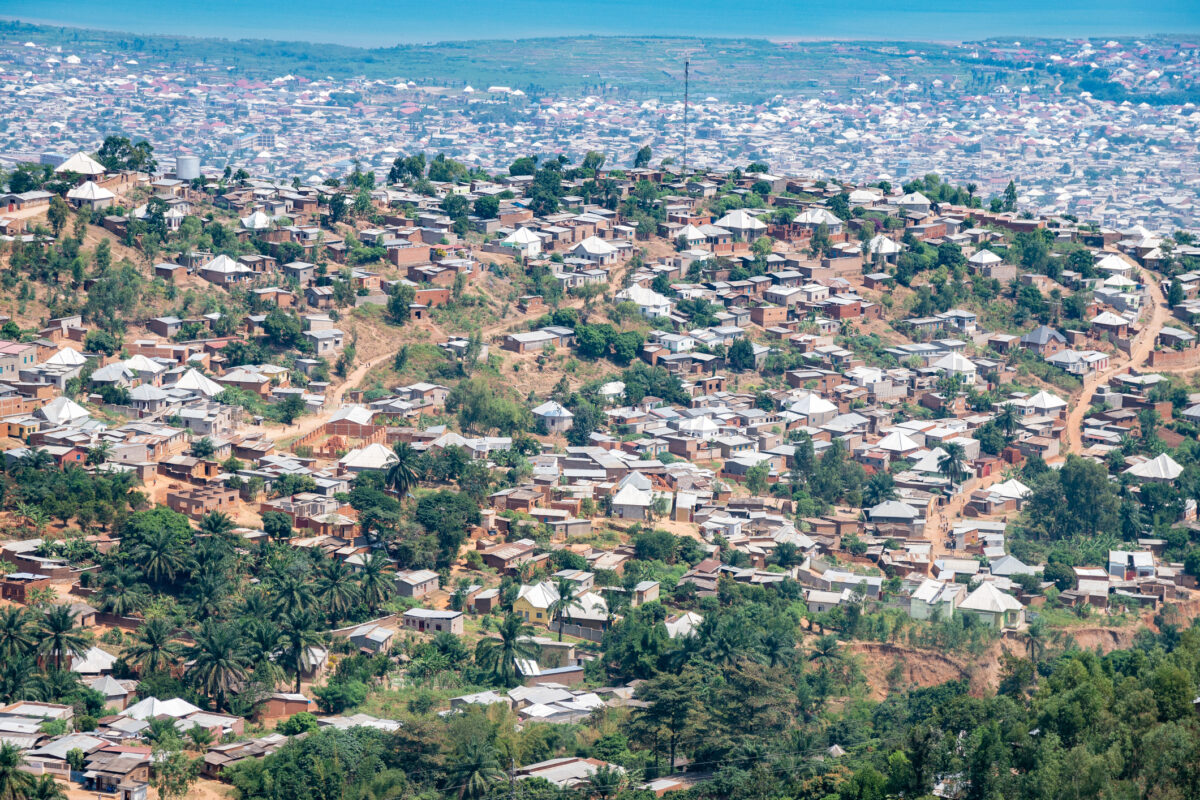
Burundi is among the most climate-vulnerable countries and among the least equipped to respond. Around 63 percent of the population lives in poverty, and three quarters are multi-dimensionally poor, facing deprivations in health, education, and living standards. A history of ethnic conflict and political violence has weakened national governance, with Burundi ranking in the bottom quarter of African countries for government effectiveness. These challenges limit the country’s ability to address the impact of climate change. In Bujumbura, situated on Lake Tanganyika and surrounded by rivers, over half the built-up area is prone to pluvial flooding, with 72 percent of the densest neighborhoods exposed to both pluvial and fluvial floods, causing an estimated $36 million in annual damages. As Bujumbura accounts for 71 percent of national urban growth and the urban population is expected to double by 2050, urgent adaptation is needed to reduce flood and erosion risks. While nature-based solutions are used informally, they remain small-scale and insufficient to meet growing needs.
GCA’s Added Value
GCA’s is promoting nature-based soil and water management (NBSWM) investments to reduce climate risks in Bujumbura. GCA’s support identifies home-grown NBSWM practices already in use in Burundi, evaluates their cost-effectiveness through pre-feasibility analyses, and suggests how these can be adapted and replicated at a larger scale to address twin challenges of flooding and erosion. Appropriate solutions will be compiled into a Compendium of NBSWM Investments, which informs future investments by World Bank and national government. By building on existing solutions, the Compendium emphasizes context-specific measures that yield multiple co-benefits (such as income generation and food production) and are therefore more likely to be sustained over time, despite limited local institutional capacity. Separately, in Bujumbura and an adjacent municipality of Gatumba, GCA is developing risk-informed land use plans to reduce climate vulnerability, based on participatory risk mapping with communities and local government.

Project goals
Mainstreaming Adaptation and Resilience
The Compendium will outline prioritized NBSWM project designs proposed for implementation under WB investments, while also serving as practical guidance for future flood and erosion reduction efforts. To support long-term uptake, GCA is upskilling government capacity to integrate NBSWM practices into infrastructure investments through peer-to-peer learning workshops for technical staff. A field-tested training manual is also being developed using accessible language, visuals, and practical guidance tailored to low-capacity environments. In parallel, risk-informed planning outputs will inform a planned commune-level land use plan in Bujumbura.
Expected Outcomes
- People, assets, and infrastructure are protected from gully erosion and flood damage: By identifying and designing priority NbS investments, GCA will contribute to mitigating the risks of erosion and flooding in Bujumbura, enhancing urban resilience.
- Strengthened government, local organizations, and community capacity to prepare for and manage climate impacts: GCA will equip stakeholders with the necessary skills and knowledge to implement nature-based solutions that address floods, landslides and other climate impacts in urban areas.
- Enhanced institutional capacity to integrate climate risk considerations in local land use and water resource management planning practices: GCA’s participatory risk mapping will ensure that risk-informed, no-regret NbS practices become embedded in local planning processes for sustainable urban development.
Timeline
GCA Support Status
Technical Assistance Preparation
GCA Support Implementation
July, 2024
GCA Support Completion
Monitoring
Finance
Total Investment Value
IFI Investment Value
$113.00M
Other Investment Value
N/A
IFI partners

Contacts
General media inquiries
info@gca.orgRequest for information
waterandurban@gca.org