
Adaptation Insights: A Practical Roadmap for Scaling Digital Climate Advisory Services in Africa
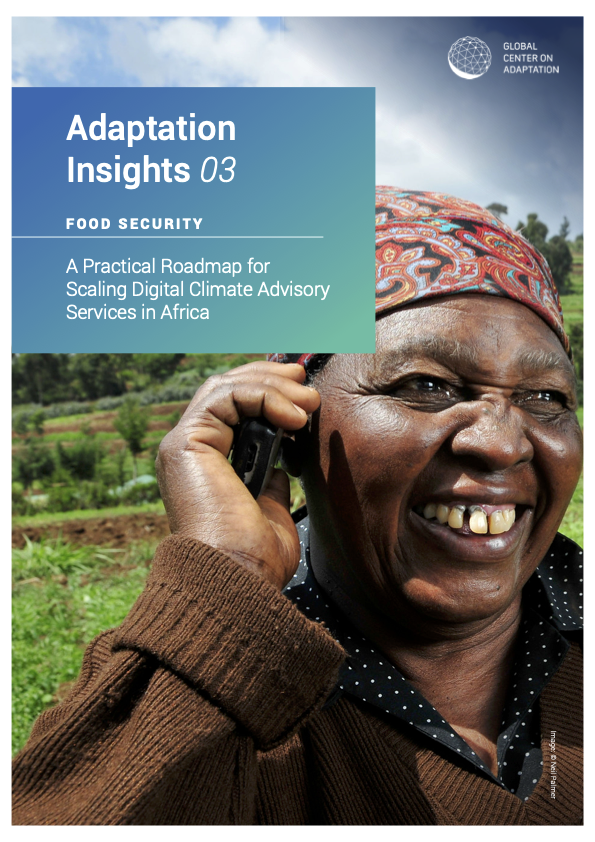
Given the high dominance of rain-fed agriculture in most parts of Africa, climate and weather patterns highly influence smallholder farm operations and hence food security and income of millions of people, especially women and resource-poor rural households. As climate shocks intensify with five of Africa’s 30 worst weather disasters occurring between 2022 and 2023, and with over 221 million people affected by extreme weather in the 2021-2025 period (more than the combined total from the previous ten years), farmers require timely, trusted, and locally relevant guidance to manage rising risks. Digital Climate Advisory Services (DCAS) is one of the cost-effective options to translate complex climate and agronomic data into simple, actionable advice delivered through SMS, voice, radio, and mobile platforms helping farmers make timely, informed decisions that protect yields, reduce losses, to accelerate climate adaptation in African agriculture and strengthen resilience. DCAS leverages on the emerging digital revolution in Africa to connect smallholder farmers to timely, location-specific advisories to manage risks like erratic rains, droughts, floods and emerging pests.
Evidence increasingly shows that DCAS deliver strong economic returns while enhancing food security. Yield gains of 10–30% have been documented across multiple countries, alongside resilience dividends such as avoiding drought losses and improved input efficiency. Yet despite this compelling business case, DCAS remain constrained by fragile financing models, data gaps, connectivity barriers, and policy cum institutional fragmentation.
This Adaptation Insight builds on GCA’s technical assistance under the Africa Adaptation Acceleration Program, which has influenced DCAS integration across 17 major agricultural investment projects across Africa with the potential to improve resilience for millions of smallholder farmers. It draws on the expertise and insights developed in deep collaboration and engagement with governments, international finance institutions, CGIAR and private sector partners to provide a practical roadmap for moving from scattered pilots to scalable, country-owned national systems.
Evidence shows that DCAS programs deliver strong returns on investment. Benefit–cost ratios range from 7:1 to 26:1, and ROI estimates reach 1:47 in Ethiopia. Yield gains of 10–30% have been documented in Rwanda, Ethiopia, and Kenya, alongside resilience dividends such as avoided losses during drought years. These results underscore DCAS’ potential to transform African agriculture and strengthen food security.
The observations presented reflect cumulative evidence and implementation experience across Africa. The message is however clear: DCAS is not a standalone solution; it is part of the operating system of climate-resilient agriculture.
Based on the field insights, recommendation for effective DCAS include the following:
Embed DCAS in national systems; Invest in data and infrastructure; Scale DCAS through existing channels by bundling advisories with insurance and input credit; Design for inclusion especially women and low-literacy farmers and; strengthen governance and standards including harmonized data protocols and interoperability
GCA reports may be republished in accordance with the Creative Commons Attribution-NonCommercial-
NoDerivatives 4.0 International Public License, and in accordance with our Terms of Use.