
When The Heat Is On: Stories of Action and Impact
E
xtreme heat is now the deadliest climate threat. It is breaking records around the world, fueling wildfires, disrupting economies and putting millions of lives at risk. By 2030, heat stress could wipe out 80 million jobs. Nearly 2.5 billion workers — almost 70 percent of the global workforce — are exposed to dangerous heat, forcing farmers to start work before sunrise and construction crews to take more breaks as temperatures soar. In 2023 alone, extreme heat erased an estimated $835 billion in income worldwide and without faster adaptation global economic losses could reach $12.5 trillion by 2050, according to the World Economic Forum.
As heat reshapes how people live and work, communities are responding. The Global Center on Adaptation launched The Heat Is On campaign to spotlight adaptation solutions already protecting lives and livelihoods, from early warning systems and worker protections to cooling measures and nature-based approaches. Yet the urgency remains clear. Adaptation finance still falls far short of what is needed and the consequences make headlines every week, from small islands at risk of disappearing, super typhoons ravaging homes without warning to major cities seeing a 25% jump in extremely hot days since the 1990s.
The Heat Is On brings these proven solutions into focus, showing what works now and what must be scaled as heat intensifies. This blog traces why extreme heat demands urgent adaptation, highlights proven responses already delivering results, and shows how the campaign helped build momentum to place adaptation firmly at the top of the international agenda in the run-up to COP30 in Brazil.
Proven solutions that break the heat cycle
Adaptation solutions exist and they are already saving lives and protecting livelihoods. From early warning systems that alert vulnerable communities to extreme heat, to cooling measures that keep workers safe, to nature-based approaches that secure water and reduce temperatures, these interventions show that practical, scalable actions can break the heat cycle. The Heat Is On brings these solutions into the spotlight, demonstrating how communities, cities, and countries are responding to rising temperatures.
1. Early Warning Systems
After the devastating 2010 heat wave in Ahmedabad, India, which reached 48.6°C and caused 1,344 deaths, the Ahmedabad Municipal Corporation (AMC) and partners developed the city’s first Heat Action Plan in 2013. The plan alerts vulnerable populations when extreme heat is imminent, activates cooling centers and shares forecasts publicly. A 2018 study found the plan helped avoid an estimated 2,380 deaths. Early warning systems like Ahmedabad’s can save nearly 100,000 lives annually and prevent $361 billion in worker losses each year.
2. Cooling Solutions
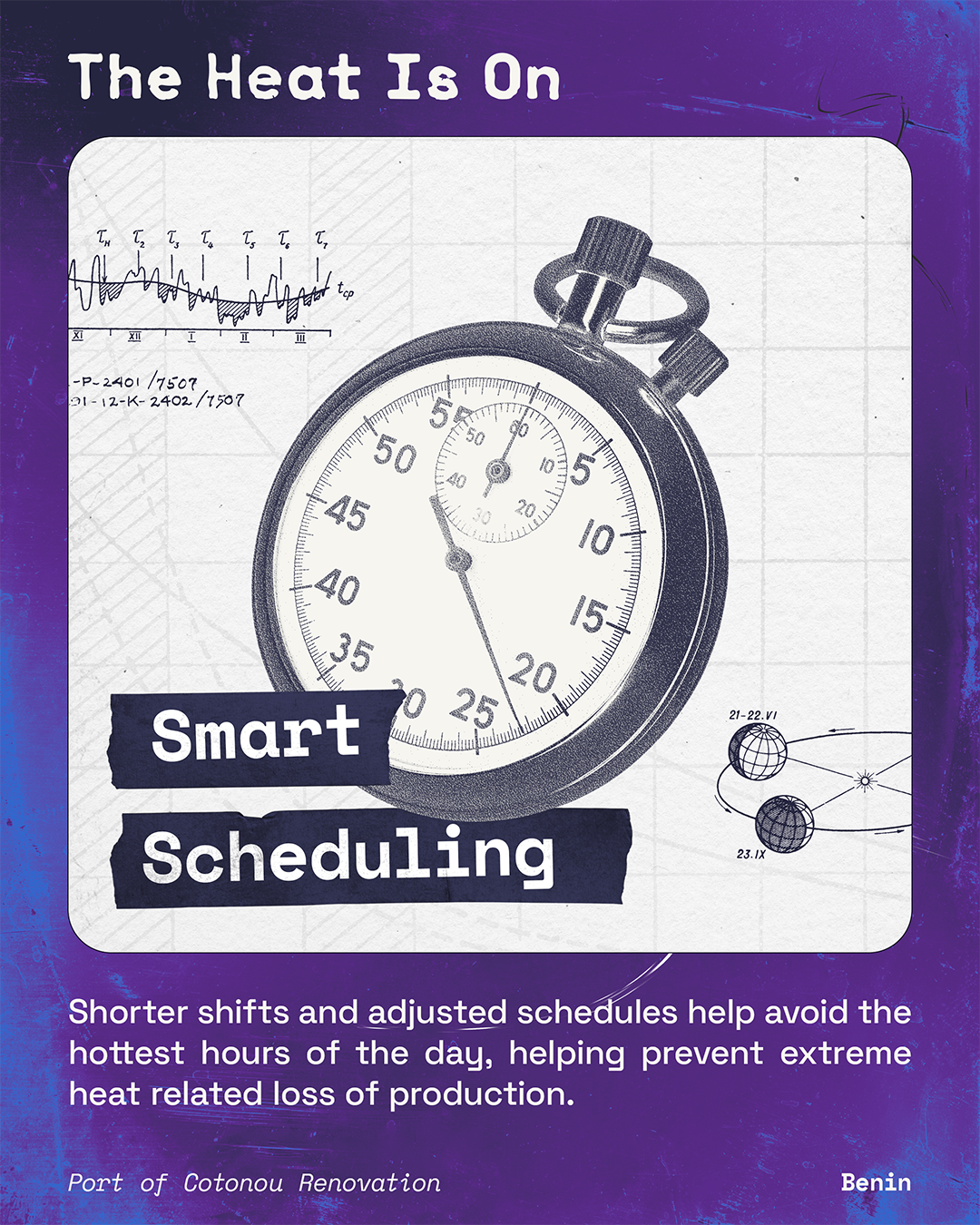
At the Port of Cotonou, Benin, hot days above 35°C with high humidity cut worker productivity by 10%. GCA and the African Development Bank through the Africa Adaptation Acceleration Program, recommended a package of adaptation measures such as shorter shifts, shaded rest areas, cooling facilities, and increased automation to reduce outdoor manual labor. These measures could cut heat-related losses by half, save €13 million by 2090, and keep workers safe and healthy.
3. Nature-based Solutions
Lima, Peru, relies on three fragile watersheds for water (the Chillón, Rímac, and Lurín rivers), increasingly stressed by rising temperatures and unpredictable rainfall. Aquafondo, a 2025 Local Adaptation Champions Award Winner, is reviving ancestral techniques – from amunas, infiltration canals that capture rainfall and guide it underground to bofedales, wetlands that act as natural sponges, absorbing rain and releasing water gradually – to secure water and buffer communities from heat and drought. These measures have absorbed 605,000 tons of CO₂, created over 1,000 jobs, and improved water availability for more than 300,000 residents.
The Heat Is On was designed to do more than share stories. Its goal was to amplify proven adaptation solutions, show that they work, and inspire action at scale. By connecting policymakers, practitioners, and communities, the campaign turned individual examples – like Ahmedabad’s Heat Action Plan, Cotonou’s worker protections, and Lima’s nature-based solutions – into a global conversation about what adaptation can achieve and push adaptation on top of the COP30 agenda.
Reaching people everywhere
From messages by former UN Secretary-General Ban Ki-moon, to youth stories from Fatoumata Boubou in Mali and Elgin Créa in the Seychelles, to the timely Heat Reports presented by Febechi Desmond, The Heat Is On connected people across the globe, turning individual stories into shared momentum for adaptation action.
The campaign reached audiences in over 41 countries, engaging youth, policymakers, and frontline communities alike. Social media metrics tell part of the story — nearly 24 million impressions, 42,000 engagements, 8,000 website visits, and 263 toolkit downloads — but the real impact was in the conversations it sparked, the networks it built, and the awareness it raised among people who influence local and global adaptation action.
Putting Adaptation at the top of the COP30 agenda
At COP30 in Belém, The Heat Is On gained visibility on the ground as campaign content was shared by participants and emerging climate voices from Brazil, the UAE, Romania, as well as international organizations such as IIED and the World Resources Institute, and featured in The Guardian and the Adaptation Campaign Hub. These exchanges amplified awareness of frontline adaptation solutions and reinforced the urgency of keeping adaptation at the top of the global agenda.

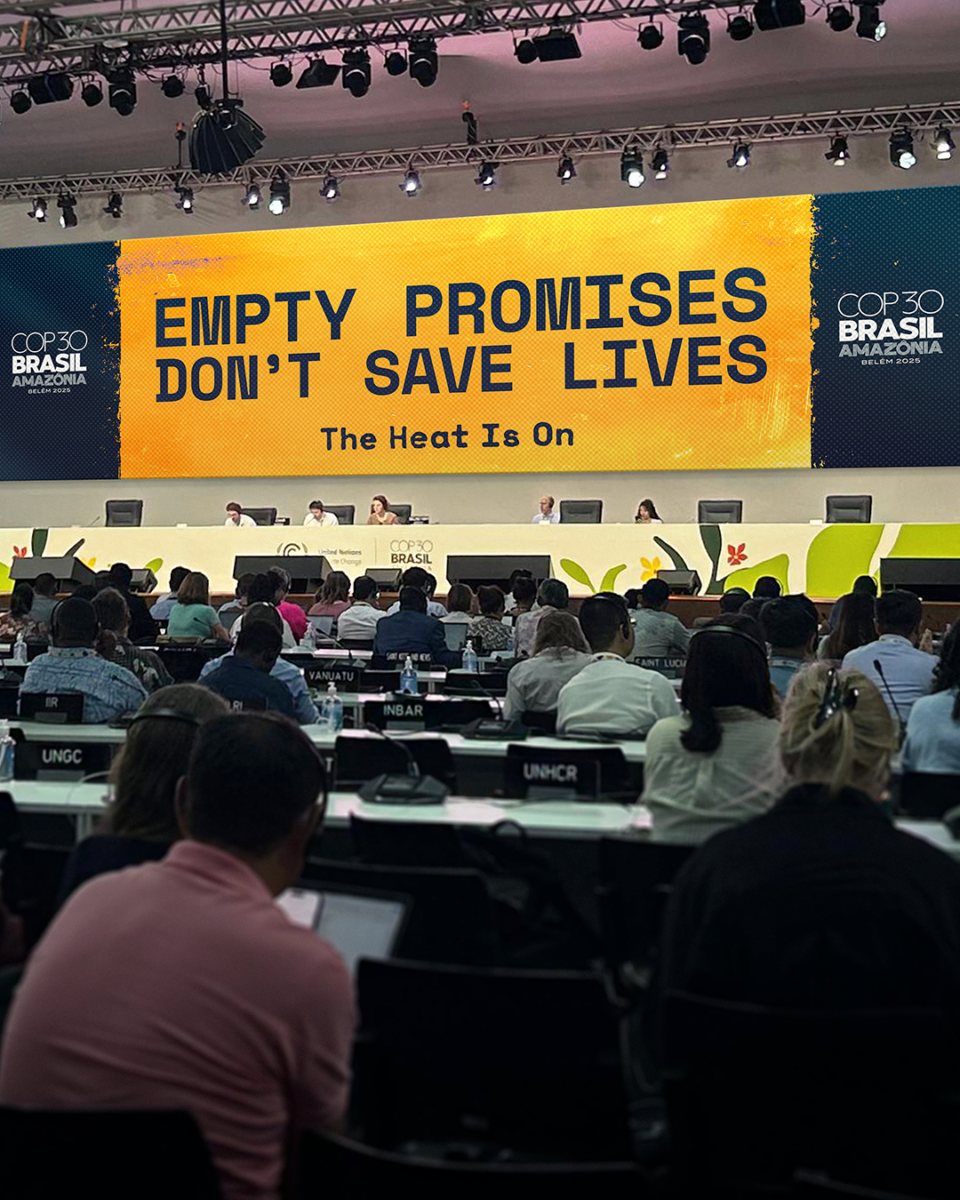
The COP30 outcomes reflected the growing recognition of global adaptation efforts. The decision to triple adaptation finance under the Belém Package is a meaningful advance that will help drive resilience already taking place across developing countries. This is a major step forward towards elevating adaptation on par with mitigation within the UNFCCC multilateral process.
The work is far from over – accelerating adaptation action, scaling solutions, and protecting communities from extreme heat must remain a global priority. The Heat Is On.

Aiyana Caballero is Senior Communications Officer at the Global Center on Adaptation.
The ideas presented in this article aim to inspire adaptation action – they are the views of the author and do not necessarily reflect those of the Global Center on Adaptation.
