Pathways to Implementing the National Roadmap and Global Tools for NbS
Roundtable Discussion #2: Bridging Infrastructure, Food Systems and Finance for Climate Resilience
Background
Bangladesh faces escalating climate risks that threaten both infrastructure and the agri-food systems. Sea-level rise, cyclones, salinity intrusion, riverine flooding, and extreme rainfall continue to disrupt agricultural production and degrade critical transport, water, and energy infrastructure. Recent analysis undertaken through the Global Center on Adaptation’s (GCA) Climate Stress Test on Infrastructure indicates that flooding alone already causes an estimated €12.3 billion in damages to the transport sector under baseline conditions, with losses projected to rise significantly by 2050. These impacts directly undermine food security by reducing connectivity, constraining market access, damaging storage and processing facilities, and weakening agri-food value chains in climate-exposed regions.
In response to these challenges, GCA, in partnership with the Ministry of Environment, Forest and Climate Change (MoEFCC), and with support from UK International Development, has been advancing climate-resilient infrastructure planning and investment in Bangladesh.
Building on the national pipeline of 35 climate-screened infrastructure projects developed in 2025 and leveraging GCA’s Global Tools for Nature-based Solutions (NbS), this initiative seeks to identify and prepare three priority investment projects that integrate NbS while strengthening agri-food system resilience.
GCA is supporting this effort through a structured, data-driven prioritization approach that combines climate risk analytics, spatial hazard mapping, MCA, investment case and financing pathway development. To ensure alignment, ownership, and bankability, the process is being guided through a series of multi-stakeholder roundtable discussions bringing together government agencies, development partners, development finance institutions, the private sector, and other key actors.
Results of the 1st roundtable
The first roundtable discussion, held in December 2025, marked the transition from project identification to project prioritization. During this roundtable, the project team and stakeholders jointly reviewed:
- The initial pipeline of 35 climate-resilient infrastructure project ideas identified under the Bangladesh Climate Resilient Infrastructure Investment Roadmap.
- A shortlisting exercise to identify 10–15 projects with strong linkages to NbS and agri-food systems.
- The application of a MCA framework to prioritize high-impact projects for further investment preparation.
Stakeholders provided feedback on the relevance of the selection criteria, the robustness of the MCA methodology, and the strategic alignment of the shortlisted projects with national development priorities and climate adaptation goals. The discussion helped validate the overall prioritization approach and resulted in broad agreement on a small set of priority project concepts to be taken forward into investment case development.
Introduction to the 2nd roundtable
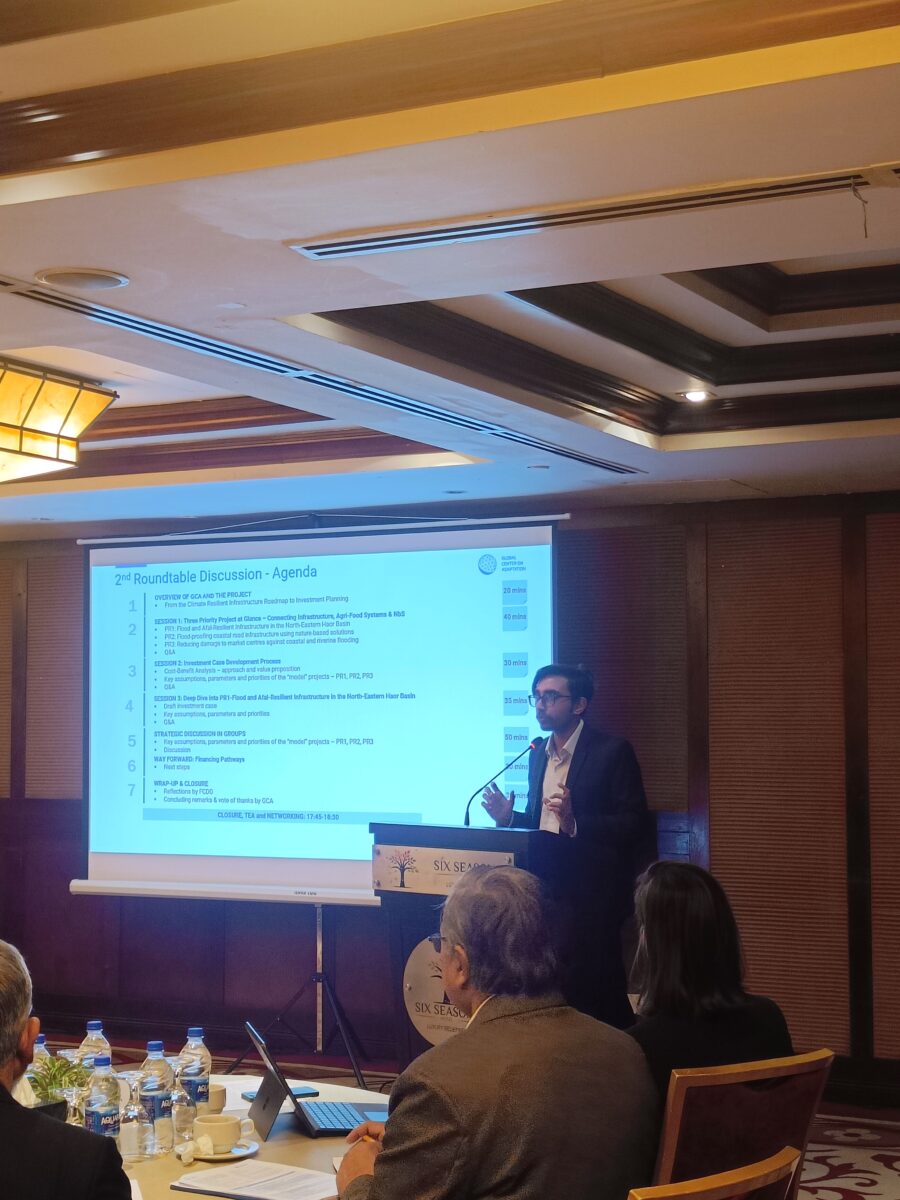
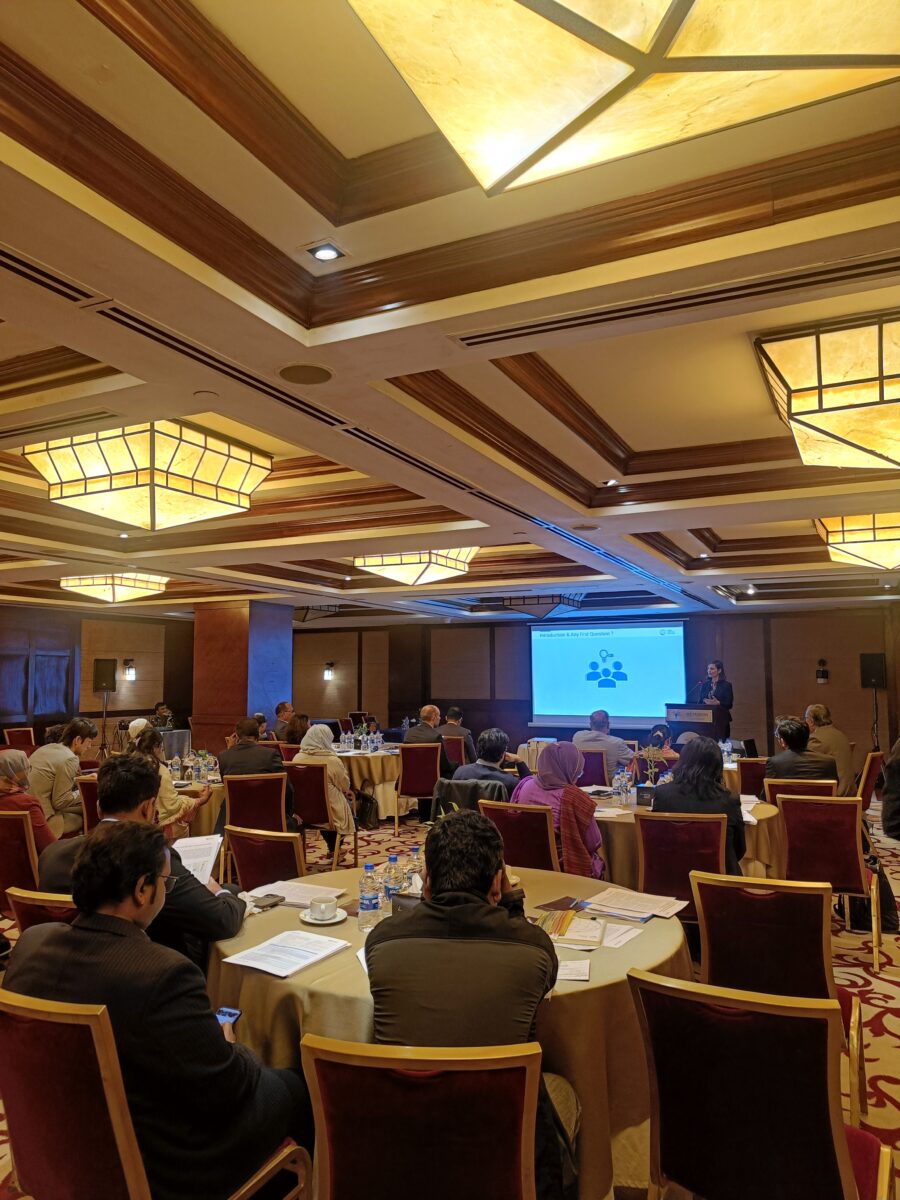
This second phase focuses on the development of investment cases for three prioritized projects. The second roundtable discussion will serve as a critical milestone by shifting the focus from project prioritization to investment design and economic justification.
The primary objective of the second roundtable is to present and discuss the preliminary Cost-Benefit Analysis (CBA) framework and assumptions for each priority project.
Stakeholder input at this stage is essential to ensure that the proposed investments are technically sound, economically viable, socially inclusive, and aligned with national priorities and financing realities.
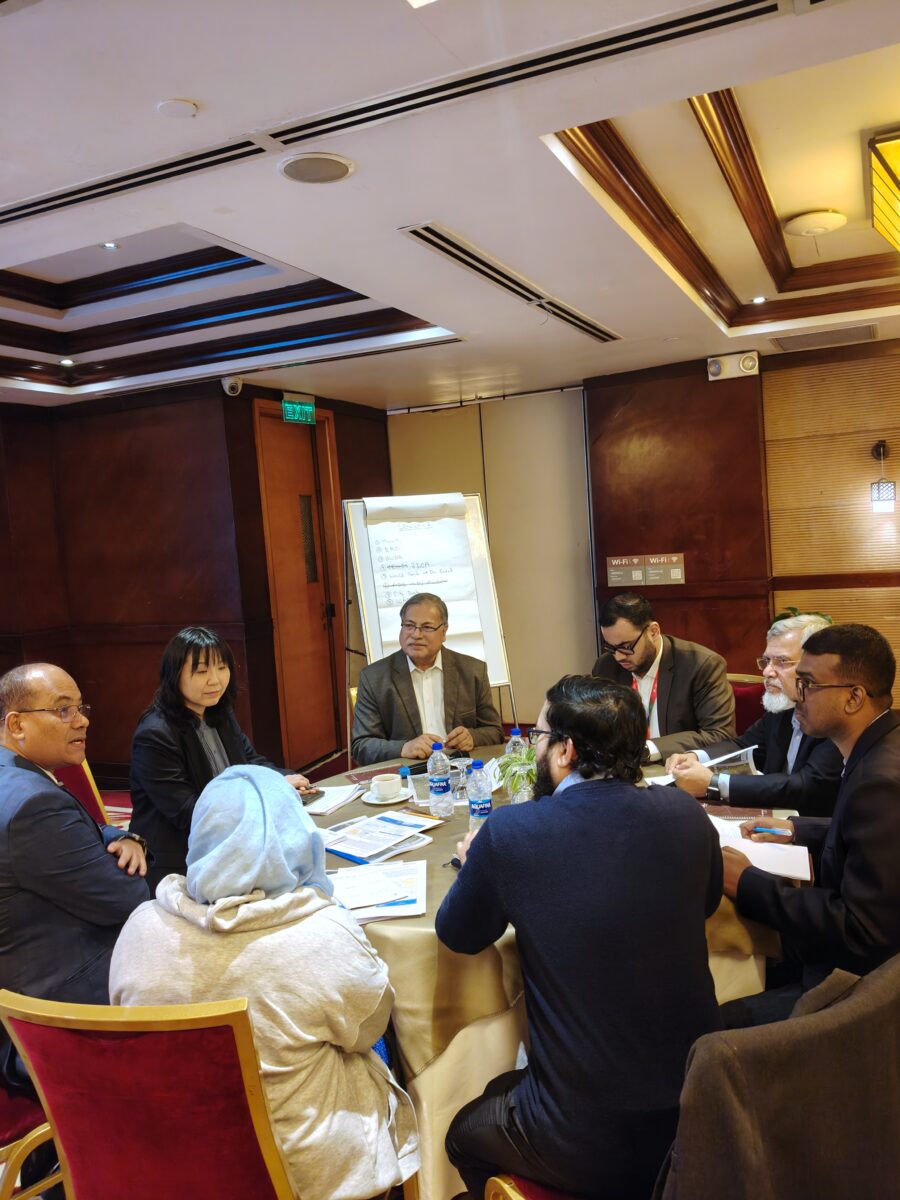
Building on the outcomes of the first roundtable, this discussion will deepen engagement with key stakeholders, strengthen ownership of the selected investment options, and support early alignment around financing pathways.
Expected outcomes
The expected outcomes of the 2nd roundtable discussion include:
- Presentation of, and feedback on the key assumptions underlying the CBA for the priority projects: expected project timeframe; anticipated benefits and co-benefits (including climate resilience, ecosystem services, and agri-food value chain impacts); identification of direct and indirect project beneficiaries; key inputs informing cost estimates and costing assumptions.
- Refinement and validation of the proposed CBA approach.
- Strengthened stakeholder awareness, alignment, and ownership of the priority investment options, alongside early engagement on potential financing pathways.
These outcomes will enable the project team to proceed confidently with the development of investment cases that integrate NbS and contribute to resilient agri-food systems in Bangladesh.