
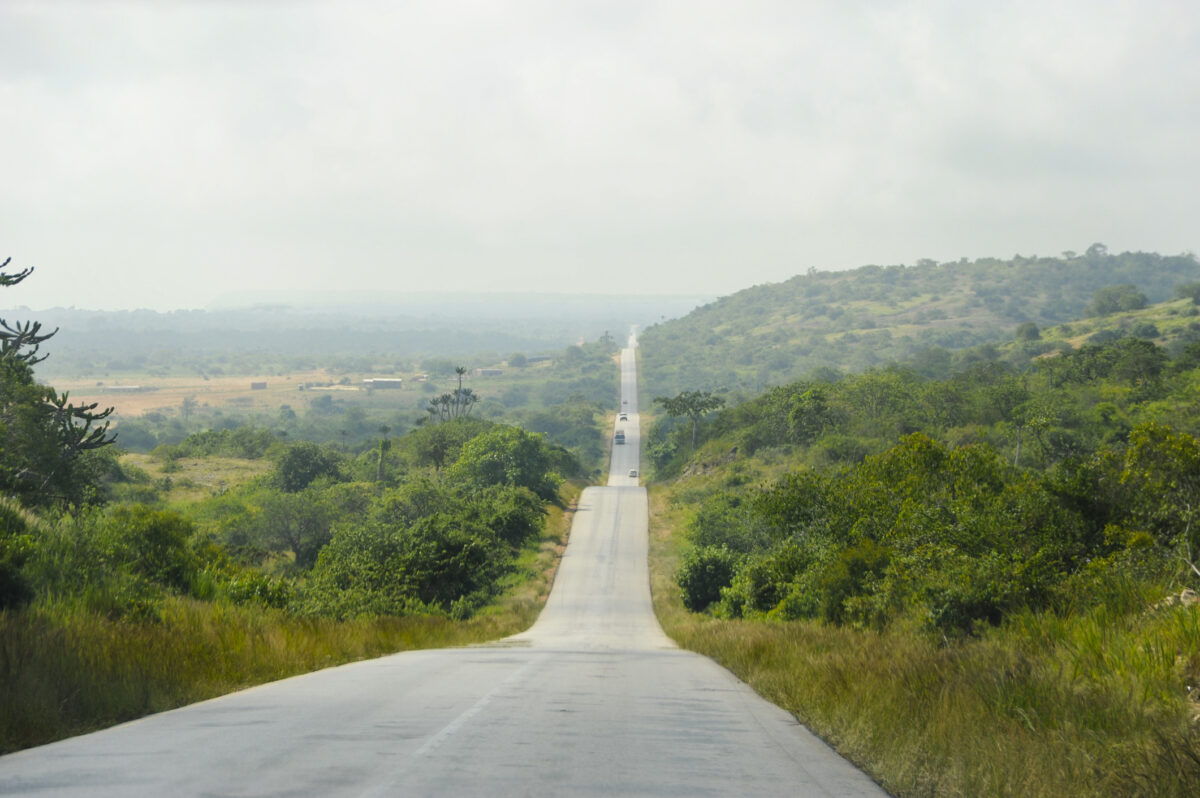
Mozambique Songo-Matambo Electricity transmission line
Adaptation Need
Mozambique’s Songo-Matambo transmission corridor plays an important role for both the national and regional power market. Climate risk assessments completed by GCA show that under a high-emission scenario (RCP8.5), there is increasing exposure to hazards such as extreme heat, floods, landslides, and wildfires, which were found to account for 94% of the projected direct climate risks. Without adaptation measures, the corridor could face direct losses of up to €10 million, representing as much as 11% of total asset value—and indirect losses due to revenue losses could reach €12 million, or up to 12.5% of expected revenue over a 30-year period. Outage-related losses threaten the electricity supply directly and/or indirectly for up to 23 million people.
GCA’s Added Value
GCA is identifying and prioritizing scalable climate adaptation measures for the transmission line and associated infrastructure. This includes analyzing climate risks to the national grid, evaluating cost effective design and maintenance options, and supporting development of technical guidelines for integrating climate resilience into future energy projects. GCA is also helping build national capacity by working with EDM and AfDB to mainstream these guidelines across Mozambique’s energy sector, and will complement their support with a Masterclass on Climate Resilient PPPs.


Project goals
Mainstreaming Adaptation and Resilience
GCA is supporting EDM and AfDB to embed climate resilience by identifying cost-effective adaptation options for design and operations and maintenance of transmission and distribution infrastructure, while strengthening institutional capacity for their climate-resilient planning and management. Informing decision-making for adaptation investments, GCA identified risk hotspots and likely points of failure across the network at national and asset levels and highlighted the socio-economic impacts of even brief power disruptions—particularly in vulnerable districts like Morrumbala, Milange, and Mavago. To address climate risks, GCA proposed a set of prioritized adaptation measures, such as vegetation management and the use of high-temperature, low-sag (HTLS) conductors, which offer a benefit-cost ratio of up to 4.1 and can extend asset life by up to 40%. GCA’s outputs highlight the need for strengthening community resilience with localized contingency measures like backup power for hospitals and educational outreach on safe land use around energy assets. A key outcome of GCA’s support is the development of national technical guidelines to be adopted by EDM. These guidelines provide a practical, step-by-step framework for integrating climate risk considerations, including socio-economic vulnerability assessments.
Expected Outcomes
- Climate resilient design and construction of 400kV HVAC single circuit transmission line from Songo to Matambo substations, 400kV of transformer/ line bay, 400kV line bay at Matambo substation.
- Climate-proofing electricity distribution for the central province in Mozambique, securing revenues and services for beneficiaries. .
- Strengthened institutional capacity for climate resilient planning for energy infrastructure. .
Timeline
GCA Support Status
Technical Assistance Preparation
GCA Support Implementation
December, 2023
GCA Support Completion
Monitoring
Finance
Project Investment Value
Total Investment Value
IFI Investment Value
$94.25M
Other Investment Value
N/A
IFI partners
Contacts
General media inquiries
info@gca.orgRequest for information
infrastructure@gca.org