
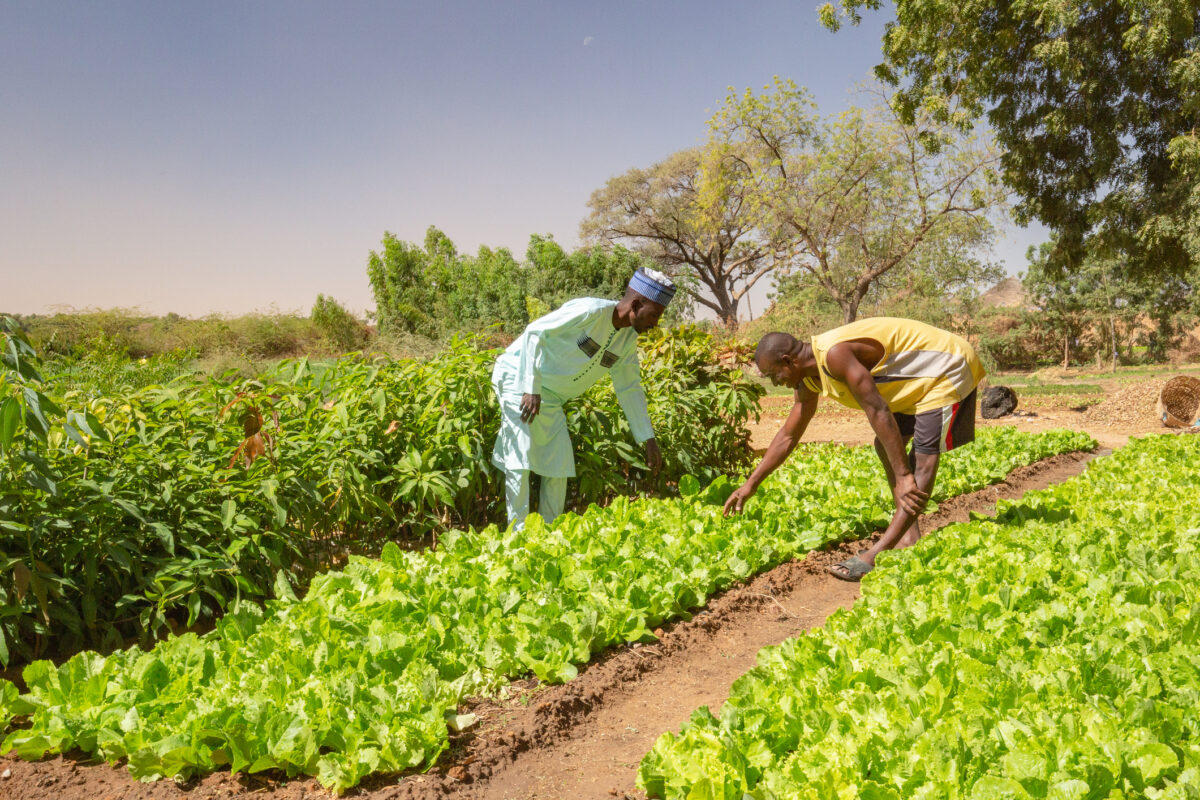
Reinforcement of Resilience to Food and Nutrition Insecurity in the Sahel
Adaptation Need
More than 99 percent of croplands in the Gambia are entirely rain-fed. Due to the reliance on rain-fed agriculture, prolonged dry spells, rising temperatures, and erratic rainfall have already had severe effects on food security in Central, Lower River and Western Coastal Regions of the Gambia. For example, Rice production dropped by 68 percent in 2007 compared to 2002, with similar declines recorded in 2011 due to poor rainfall. From 2001 to 2020, the country experienced seven major floods and 13 disaster events between 2008 and 2022, displacing thousands and damaging croplands. According to the 2022 National food Security survey, more than a quarter of Gambians (27 percent of the population) were food insecure, which translates into more than 646,800 people. Without climate-smart adaptation measures, climate change will continue to threaten agricultural productivity, with severe implications for food security.
GCA’s Added Value
GCA is supported the integration of climate-smart adaptation through development of the Gambia Google Earth Engine (GEE) web platform for improved weather & climate advisory services in target Gambian value chains. In addition, GCA conducted a market assessment on Digital Climate Advisory Services (DCAS) and strengthened capacity of government agencies to disseminate digital weather and climate information to smallholder Gambian farmers.

Project goals
Steaming Adaptation and Resilience
To contribute to the resilience of Gambian agricultural production, GCA, in collaboration with the Department of Water Resources (DWR), developed a Google Earth Engine (GEE) web platform. The platform integrates diverse datasets—including meteorological data (both station-based and model-based), climate projections, natural hazards, and agricultural information—to support the Government of The Gambia in delivering targeted weather and climate advisory services for key agricultural value chains. The platform facilitated access to timely and localized climate information, and address key climate hazards such as erratic rainfall, droughts, and extreme temperatures. Additionally, GCA has strengthened the institutional capacity of DWR to integrate and utilize climate-smart agriculture data, and to disseminate digital weather and climate information to smallholder farmers, thereby reducing vulnerability and increasing the resilience of agricultural livelihoods in the face of a changing climate.
Expected Project Outcomes
GCA’s support to the program is expected to generate the following outcomes:
- Climate-smart agriculture data to disseminate digital weather and climate information to smallholder farmers developed.
- Enhanced digital system for dissemination of agro-weather and geo-information to inform agricultural decisions.
Timeline
GCA Support Status
Technical Assistance Preparation
GCA Support Implementation
December, 2022
GCA Support Completion
June, 2025
Monitoring
Finance
Project Investment Value
Total Investment Value
IFI Investment Value
212.27M
Other Investment Value
19.19M
IFI partners
Contacts
General media inquiries
info@gca.orgRequest for information
FoodsecurityTeam@gca.org