
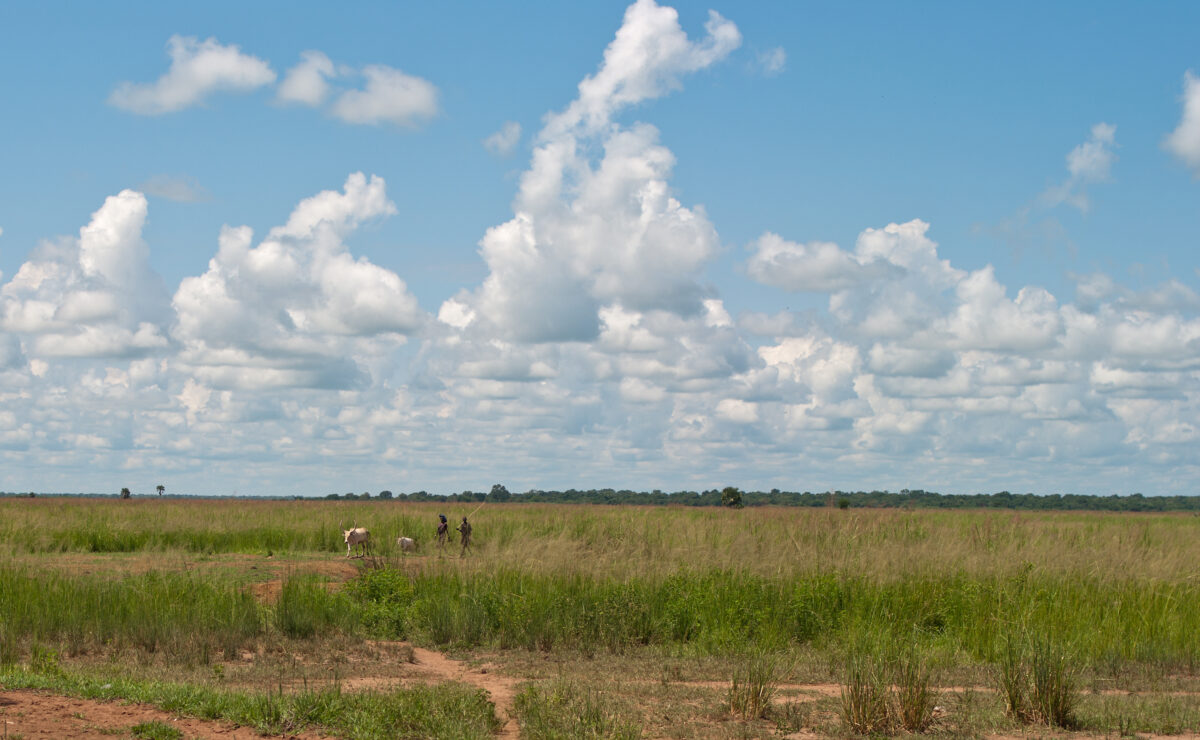
South Sudan Climate Resilient Food Security and Agricultural Transformation Project
Adaptation Need
South Sudan faces increasing climate risks—including erratic rainfall, floods, and prolonged dry spells—that undermine agricultural productivity and food security. These climate–induced challenges are particularly severe for smallholder farmers engaged in sorghum, rice, sesame, and fisheries value chains. The CRAFT Project aims to build resilience by promoting climate-smart production and postharvest management practices, rehabilitating irrigation and drainage infrastructure, expanding value addition and market systems, and strengthening digital advisory services.
GCA’s Added Value
GCA’s support for South Sudan’s CRAFT project focuses on strengthening climate resilience across four key agricultural value chains through climate risk and vulnerability assessments, analysis of climate-resilient seed systems, and support for digitalizing seed production. GCA’s technical assistance includes co-designing and scaling digital advisory platforms, enhancing early warning systems, and enhancing the capacity of extension services and stakeholders to deliver tailored climate adaptation solutions. In collaboration with five CGIAR Centers, —IWMI, IITA, CIAT, CIMMYT, and ICRISAT—GCA supports the integration and scaling up of adaptation innovations from the CGIAR including climate-resilient irrigation innovations, digital advisory tools for drought and flood monitoring, and climate risk management tools.

Project goals
Mainstreaming Adaptation and Resilience
GCA interventions aim to strengthen resilience in prioritized value chains—sorghum, rice, sesame, and fisheries—through improved, sustainable practices, and inclusive digital extension services, with a focus on empowering women, youth, and local communities
Expected Outcomes
- 40% increased production and productivity of rice, sorghum, and fish
- More profitable jobs created for at least 179,200 Women and Youth (50% women and 60% youth)
- Quantities of additional climate-smart quality seeds produced and distributed- Rice (2,100 tones), Sorghum (1,66.7 tones)
- Farmers using improved and climate-resilient practices (disaggregated by age, sex)
- Enhanced digital, e-extension and climate advisory services for at least 100,000 farmers
Timeline
GCA Support Status
Technical Assistance Preparation
GCA Support Implementation
July, 2024
GCA Support Completion
Monitoring
Finance
Project Investment Value
Total Investment Value
IFI Investment Value
$46.20M
Other Investment Value
$5.10M
IFI partners
Contacts
General media inquiries
info@gca.orgRequest for information
FoodsecurityTeam@gca.org