
Homa Bay approves People-Led Climate Adaptation Plan
H
oma Bay County, Kenya, June 2026 – Across Africa, the impacts of climate change are often felt first and most severely by low-income communities living in informal settlements. These communities frequently face flooding, poor drainage, inadequate water and sanitation services, insecure housing, and limited access to basic infrastructure. Yet despite being on the frontline of climate impacts, they are often excluded from formal planning processes that shape how cities grow and where public investments are made. In Homa Bay County, Kenya, that is beginning to change.
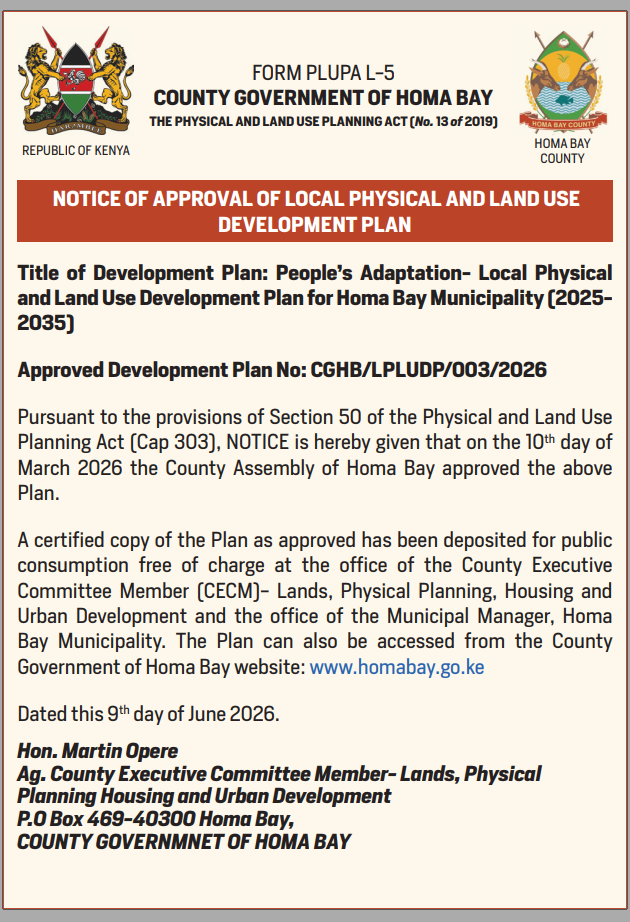
Homa Bay County has formally adopted Kenya’s first People’s Adaptation – Local Physical and Land Use Development Plan for Homa Bay Municipality (2025–2035), creating a new model for embedding community-led climate adaptation into official urban planning. Approved on 10 March 2026 by the Country Assembly and officially gazetted by the County Government, the plan is now recognized as an official statutory planning framework that will guide future development within Homa Bay Municipality.
Planning Led by Communities
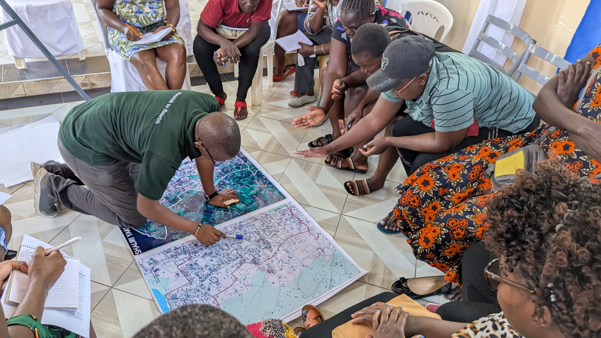
The approval represents the culmination of a highly participatory planning process supported by GCA and implemented in partnership with Akiba Mashinani Trust (AMT), Homa Bay County Government, Homa Bay Municipality, local communities, and a range of stakeholders. Through the People’s Adaptation Planning approach, residents helped identify climate risks, development priorities, and investment needs, ensuring that local knowledge and lived experiences informed planning decisions from the outset.
Unlike conventional planning processes, the Homa Bay initiative placed communities at the center of decision-making. More than 300 local youth participated in household mapping and data collection exercises, while residents from urban neighborhoods, informal settlements, and island communities contributed directly to shaping the municipality’s future vision. The resulting plan integrates climate resilience, land use planning, infrastructure development, and community priorities into a single framework designed to support sustainable urban growth.
From Approval to Implementation
For GCA, the approval demonstrates how locally led adaptation principles can be embedded within formal government systems. By translating community-generated priorities into an officially recognized development plan, Homa Bay has created a model for how adaptation planning can move beyond consultation and become institutionalized within local governance processes.
The focus now shifts from planning to implementation. The approved plan provides a framework for future investments in climate-resilient infrastructure, land management, housing, water and sanitation services, public spaces, and other priority interventions identified by communities during the planning process.
The Homa Bay experience highlights three important lessons for climate adaptation planning: communities are a source of valuable planning knowledge rather than simply beneficiaries of development; climate resilience can be integrated into statutory planning instruments rather than treated as a standalone exercise; and meaningful government ownership is essential for translating community priorities into implementable investments and policies.
