
Reports
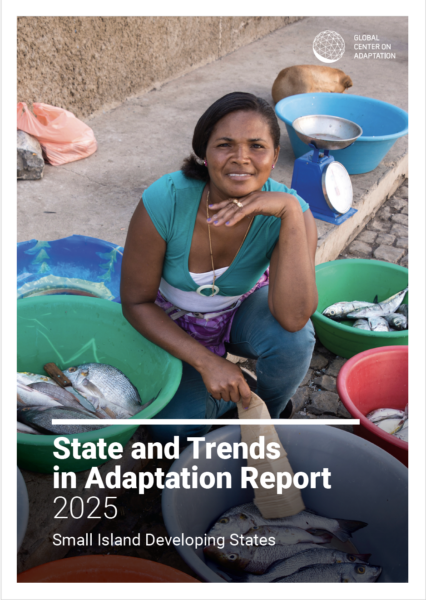
State and Trends in Adaptation Report 2025: Small Island Developing States
The 2025 edition of the State and Trends in Adaptation Report will provide an integrated overview of climate risks, adaptation action, and financing needs and gaps in small island developing states.
Financing Adaptation: A holistic approach to mobilizing adaptation finance
Mobilizing adaptation finance requires institutions with the skills to identify climate risks, design effective responses and connect them with suitable sources of funding. This brief examines GCA’s work in Bangladesh to strengthen those capabilities among civil servants and banking professionals. Working with national training institutions, the Ministry of Finance’s Economic Relations Division and Bangladesh Bank, GCA developed and piloted masterclasses on gender-responsive climate finance, with the aim of incorporating this training into established curricula.
14 October 2026
Institutionalizing Climate Risk into Infrastructure Decision-making
Climate risk analysis can help shape infrastructure investments, but its lasting value depends on how institutions use it in their decisions. This brief draws on GCA’s support to the preparation of Bangladesh’s Green Railway Transport Project, examining climate risks along the Dhaka–Chattogram railway corridor. The work combined assessments of flooding, storm surge and extreme temperatures with analysis of adaptation options, including nature-based solutions, alongside training and guidance for infrastructure agencies.
14 October 2026
Climate information, water management and local adaptation decision-making
Climate information can support farmers’ adaptation decisions when it addresses the choices they face and is backed by practical support. This brief examines a pilot initiative in Bangladesh’s water-stressed Barind region, delivered by GCA with BRAC, the International Water Management Institute and local partner Dascoh. The initiative combined climate and groundwater modelling with farmer training, exposure visits and demonstration activities to support water-efficient farming, alternative crops and livelihood diversification.
14 October 2026
Mainstreaming Locally-Led Adaptation into Municipal Planning
Bringing community priorities into municipal planning is an important step towards scaling locally led adaptation. This brief examines GCA’s work with Practical Action and Narayanganj City Corporation in Bangladesh to inform an Asian Development Bank-supported urban development project. Through People’s Adaptation Plans in 16 informal settlements and Women’s Adaptation Labs in five settlements, the initiative helped residents identify their needs and engage directly with city authorities. The approach combined local knowledge with climate risk assessments to inform future investments in infrastructure and basic services.
14 October 2026
Climate-resilient T&D networks in Africa
Climate change is placing growing pressure on electricity transmission and distribution networks, threatening reliability, asset life, and energy security. This brief presents a practical framework for assessing climate risks and integrating cost-effective resilience measures across the project cycle, drawing on lessons from projects in Mauritania–Mali, Ethiopia, and Mozambique.
18 September 2026
Best Bets for Gender-Responsive Digital Climate Advisory Services (DCAS)
Climate change is increasing uncertainty in agricultural decision-making, while unequal access to digital services can limit farmers’ ability to act on climate information. This brief presents practical approaches to make Digital Climate-informed Agricultural Advisory Services more gender-responsive, inclusive, and actionable, strengthening access, trust, uptake, and links to the resources farmers need to adapt.
18 September 2026
17 September 2026