
CAR Inclusive and Resilient Cities Project
Adaptation Need
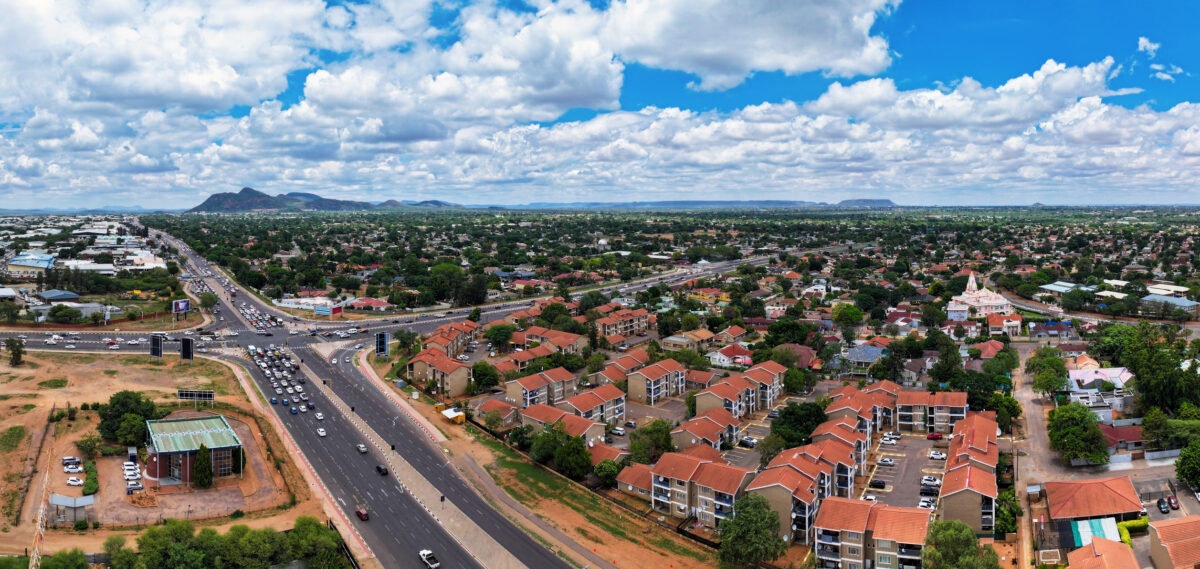
The Central African Republic (CAR), which is classified as a conflict-affected fragile state, suffers from persistent armed civil conflict, low government effectiveness and high social vulnerability: CAR ranks 191 out of 193 countries in the Human Capital Index, with national poverty rates above 70 percent. Limited institutional oversight and capacity hinder CAR’s capacity to respond to growing climate risk. Altering rainfall patterns, including both increased incidence of drought and intense flooding are likely, according to future climate projections. In August 2021 in Bangui, 4,120 people were affected by torrential rain, including 2,307 children, 48 pregnant women, 172 nursing mothers, and 23 elderly people. A business-as-usual scenario predicts GDP losses of up to 7.8 percent by 2050 due to climate change. Existing infrastructure is not sufficiently resilient to climate change and has been further weakened by successive conflicts that have led to its destruction. Nature-based solutions are employed informally and at small scale, but not adequate to the growing need for flooding and erosion mitigation in large urban areas of Bangui, Berberati and Birao.
GCA’s Added Value
GCA’s is promoting nature-based soil and water management (NBSWM) investments that will reduce climate risks in target cities in CAR. Ongoing GCA support identifies home-grown NBSWM practices that are already in use in CAR, evaluates their ability to address key climate risks, and suggests how these can be adapted and replicated at a larger scale to address twin challenges of flooding and erosion. Appropriate solutions will be compiled into an Inventory of NBSWM practices, which informs future investments by the World Bank and national government. By building on existing local practices, the Inventory emphasizes context-specific measures with multiple co-benefits, such as income generation and food production, supporting scaling and sustainability in fragile settings with limited institutional capacity, and are therefore more likely to be sustained over time.

Project goals
Mainstreaming Adaptation and Resilience
The Inventory will outline relevant NBSWM practices that could be scaled up under World Bank investments, while also serving as practical guidance for future flood and erosion reduction efforts. To support long-term uptake, GCA is strengthening awareness and understanding among government and communities on the role and applications of nature-based solutions. As part of this effort, GCA will develop a training manual for communities on NbS for soil, water, and land management. The manual is designed as a practical tool for government officials and NGOs to use in training and supporting community-level implementation.
Expected Outcomes
- People, assets, and infrastructure are protected from gully erosion and flood damage: By identifying and designing priority NbS investments, GCA will contribute to mitigating the risks of erosion and flooding in target cities, enhancing urban resilience.
- Enhanced knowledge and awareness among government and local organizations of how Nature-based Solutions can help address key climate risks—such as floods, gully erosion, and landslides—in urban areas, supported by the development of the NbS Inventory.
Timeline
GCA Support Status
Technical Assistance Preparation
GCA Support Implementation
September, 2024
GCA Support Completion
Monitoring
Finance
Project Investment Value
Total Investment Value
IFI Investment Value
$70.00M
Other Investment Value
N/A
IFI partners

Contacts
General media inquiries
info@gca.orgRequest for information
waterandurban@gca.org