
From vulnerability to resilience: a nature-first approach for coastal towns in Bangladesh
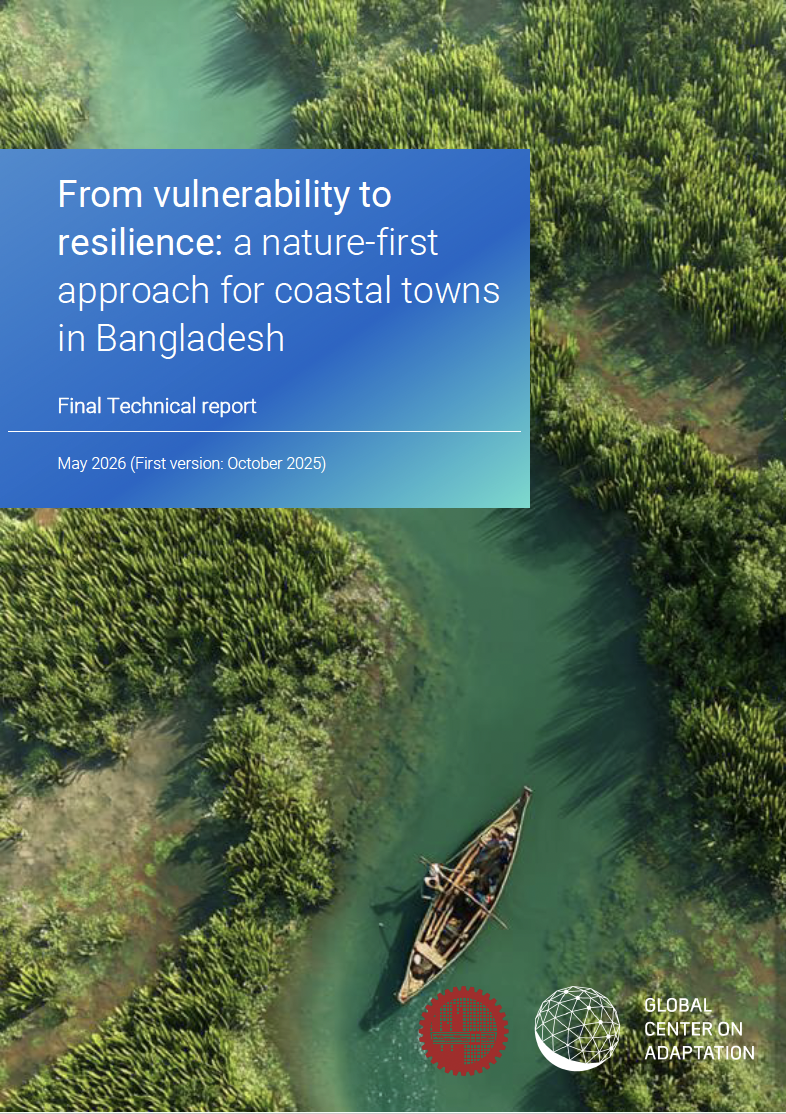
Bangladesh’s coastal towns are increasingly exposed to rising sea levels, salinity intrusion, flooding, erosion, and extreme heat, placing growing pressure on urban infrastructure, ecosystems, and livelihoods. To support more resilient urban development pathways, the Global Center on Adaptation (GCA) is launching From Vulnerability to Resilience: A Nature-First Approach for Coastal Towns, a climate resilience assessment covering 22 coastal Pourashavas in Bangladesh, including detailed analyses of Bagerhat, Chalna, Morelganj, and Kuakata.
The report highlights how nature-based solutions, such as restoring canals and wetlands, expanding urban green spaces, strengthening vegetated embankments, and improving drainage and rainwater harvesting systems, can help coastal municipalities reduce climate risks while enhancing livability and sustainability. Discover more about the project, with a short video capturing stories, landscapes, and challenges faced in these locations, as a reminder that resilience is not only about infrastructure but also about protecting people, ecosystems, and the future of coastal communities.
Developed by GCA in technical partnership with Bangladesh University of Engineering and Technology (BUET), the report forms part of the technical assistance provided by GCA in support of the Asian Development Bank (ADB) investment project preparation, in coordination with the Local Government Engineering Department (LGED), the institutional partner for the initiative. The assessment also benefited from valuable inputs from project development partners.
The GCA technical assistance for this project is made possible through the financial support of the UK Foreign, Commonwealth & Development Office (FCDO).
GCA reports may be republished in accordance with the Creative Commons Attribution-NonCommercial-
NoDerivatives 4.0 International Public License, and in accordance with our Terms of Use.