
Handbook for Financial Institutions: Climate Adaptation Finance
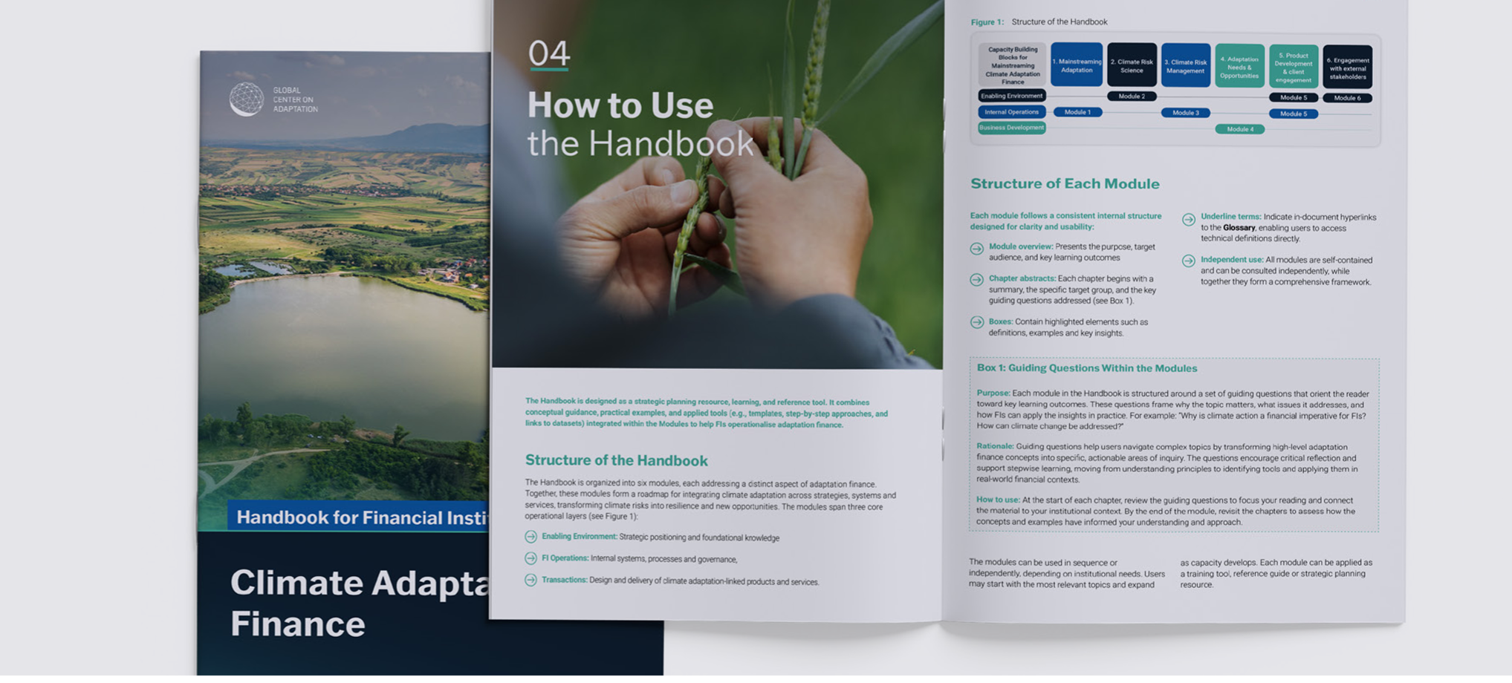
To support Financial Institutions globally, GCA developed the Handbook on Climate Adaptation Finance, a practical resource designed to help them integrate climate adaptation into their strategies, operations, and financing activities.
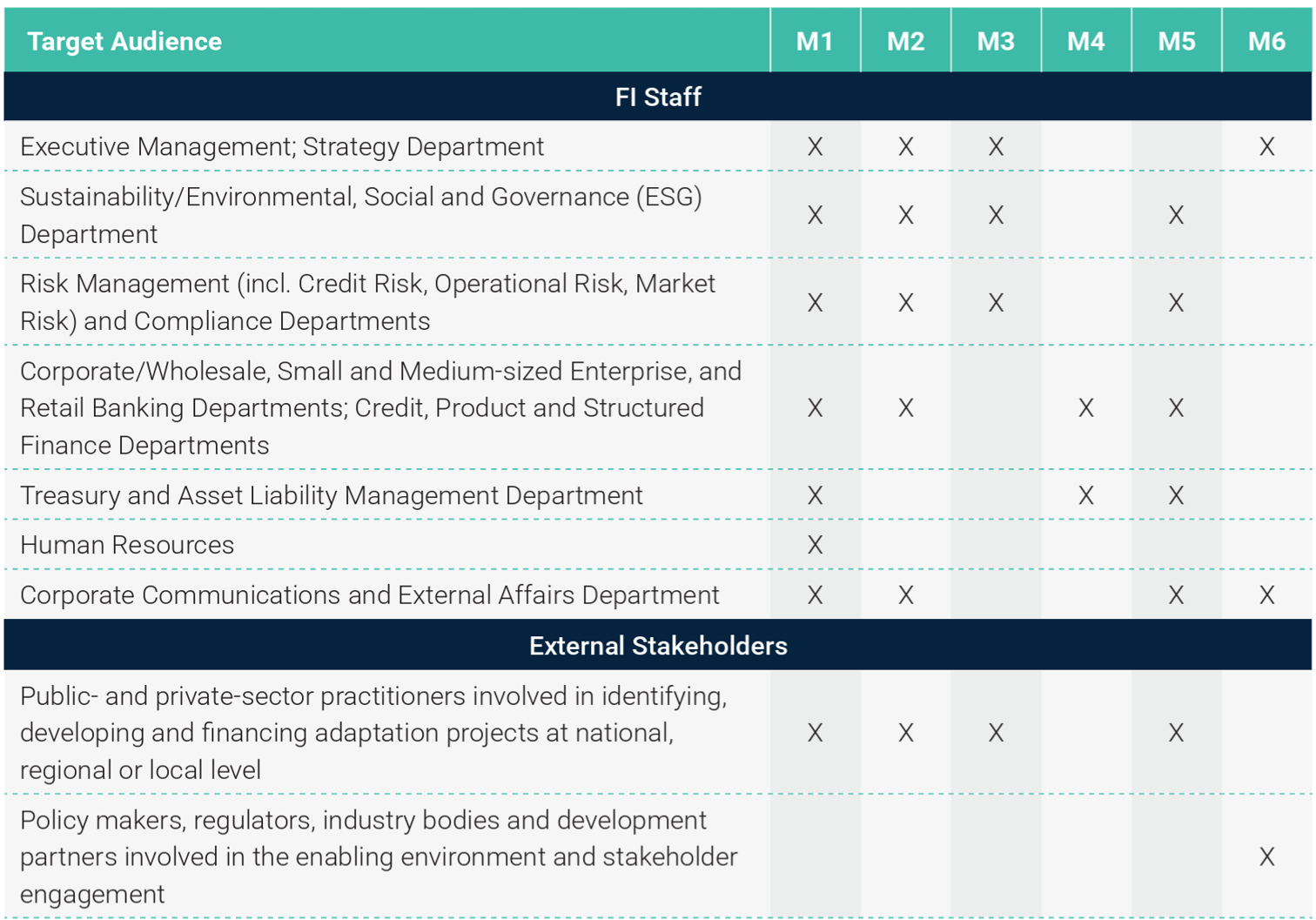
The Handbook is designed primarily for financial institution professionals working in strategy and business development, sustainability, risk management, and operations. It is also relevant for policymakers, regulators, development partners, and public- and private sector practitioners involved in developing or financing climate adaptation investments.
This Handbook was developed in 2025 through a collaborative process co-led by the Global Center on Adaptation (GCA), under the Africa Adaptation Acceleration Program (AAAP), and the European Bank for Reconstruction and Development (EBRD), supported by Frankfurt School of Finance & Management, RebelGroup, and Haskoning, drawing on consultation with financial sector practitioners and development institutions. It is divided in the following Modules:
Module 0: Primer Seizing the Climate Adaptation Finance Opportunity
This module provides an introduction to the handbook, outlining its purpose, key content areas, structure, intended audience, and guidance on how to use it effectively. It also describes the methodology and collaborative process used in its development.
Module 1: Investing in Adaptation: Why Financial Institutions Have a Pivotal Role and Opportunity in Building a Resilient Tomorrow
Module 1 establishes the urgency of climate adaptation for FIs, especially those in vulnerable regions. It introduces the concept of mainstreaming climate adaptation and outlines the foundational building blocks for developing climate-adaptive portfolios and finance pipelines, setting the stage for the modules that follow. It also emphasises the importance of building institutional and human capacity within FIs, recognising that scaling climate adaptation finance requires both technical tools and skilled personnel and organizational readiness.
Module 2: Understanding Climate Change Science: What Financial Institutions Must Know
This module explains the fundamentals of climate change and its effects on economies and financial sectors worldwide. By exploring climate hazards, impacts and common challenges such as data gaps, it equips FIs to assess their risk exposure and begin identifying viable adaptation opportunities.
Module 3: Climate Risk Modelling for Financial Institutions: From Compliance to Strategy
As climate risks grow more complex, Module 3 offers an introduction to modelling techniques such as scenario analysis and stress testing, emphasising their strategic value beyond compliance.
Module 4: Where to Invest: Adaptation Needs, Finance Solutions and Tools
This module presents the business case for adaptation finance, using sector-by-sector fact sheets to highlight specific examples of adaptation solutions and their monetisable benefits and co-benefits for both borrowers and FIs. It emphasises how enhancing climate resilience can align with financial performance and profitability. The module explores a range of financing instruments and capital strategies, such as blended finance, concessional capital, resilience bonds, green bonds, and insurance, to support adaptation investments. It also offers a practical roadmap for developing bankable projects and mobilising external finance at scale.
Module 5: Tailoring Solutions to Clients: Climate Adaptation Product and Pipeline Development in Financial Institutions
This module focuses on demonstrating how thoughtfully designed adaptation-finance interventions can transform perspectives: vulnerable clients represent valuable opportunities for resilient and commercially sound lending.
Module 6: Aligning Ambition and Action: Stakeholder Engagement for Adaptation Finance
This module focuses on creating the institutional and policy-enabling environment needed to scale adaptation finance. It highlights how FIs can engage with regulators and partners to align incentives, remove barriers, and drive systemic change through collaboration and strategic leadership.
GCA reports may be republished in accordance with the Creative Commons Attribution-NonCommercial-
NoDerivatives 4.0 International Public License, and in accordance with our Terms of Use.